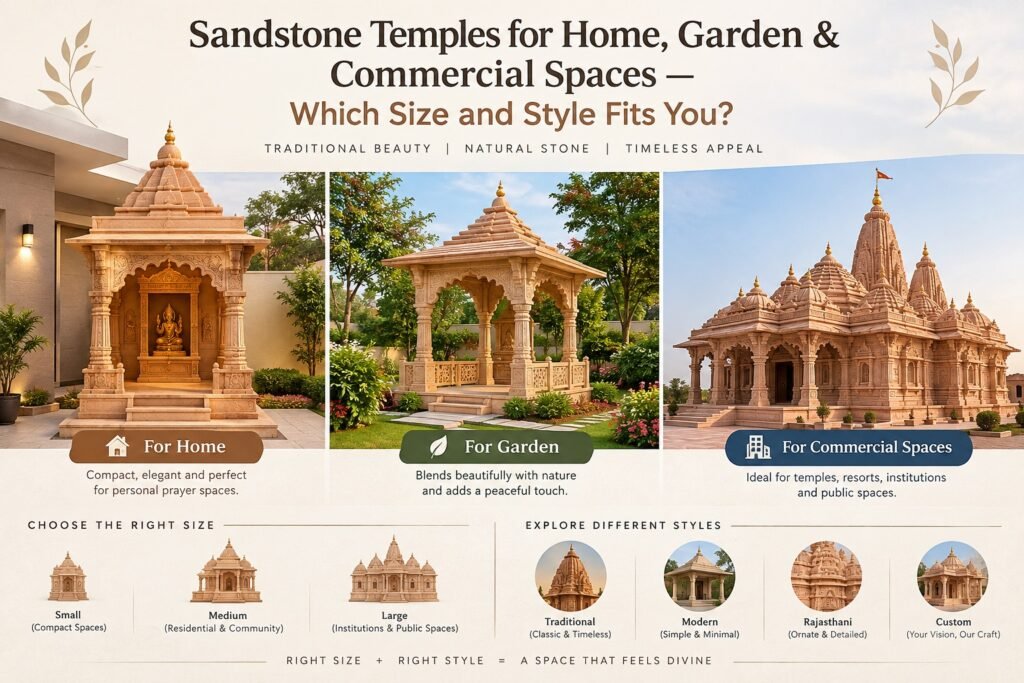
A temple is never just a structure — it’s the spiritual anchor of a space, whether that space is a quiet corner of your home, a garden courtyard, or the grand entrance of a resort. Sandstone has been the material of choice for temple construction in India for centuries, prized for its durability, natural warmth, and the intricate carving it allows. But choosing the right sandstone temple isn’t only about aesthetics — it’s about matching size, style, and placement to the space you actually have.
If you’re exploring options from sandstone temple manufacturers, here’s a practical guide to help you decide what fits your home, garden, or commercial property.
Table of Contents
ToggleCompact Temples for Home Mandirs
For apartments, independent homes, and smaller mandir rooms, compact sandstone temples are the most practical choice. These are typically designed to fit within a dedicated puja corner, a wall niche, or a small platform, without overwhelming the room.
When people search for sandstone temples for home, they’re usually looking for:
- Space-efficient designs — single-shikhara (spire) structures with a modest footprint, ideal for rooms with limited floor area
- Wall-mounted or corner mandirs — carved sandstone panels or small temple frames that sit flush against a wall
- Tabletop and platform temples — miniature versions with full architectural detailing, suited for those who want intricacy without scale
- Custom sizing — many manufacturers offer made-to-order dimensions so the temple fits exact alcove or platform measurements
The key with home temples is balancing detail with proportion — ornate carving on a small structure can look busy in a compact room, so simpler, refined designs often work better than elaborate multi-tiered ones.
Outdoor/Garden Temple Considerations
Garden temples serve a different purpose — they’re meant to be a visual and spiritual focal point viewed from a distance, often surrounded by landscaping, water features, or seating areas. This changes the design priorities considerably.
Key considerations for garden or outdoor placements:
- Weather resistance: Sandstone naturally withstands sun, rain, and temperature fluctuations well, but the specific stone grade (like Dholpur or Rajasthan sandstone) matters for long-term durability against moisture and moss
- Visibility and scale: Outdoor temples generally need to be larger than indoor ones since they’re viewed from farther away and should hold their own against the surrounding landscape
- Base and foundation: Unlike indoor temples, garden structures need a proper stone or concrete foundation to handle ground moisture and settling
- Openness of design: Many garden temples use jali (lattice) work and open mandapas (porches) to let light and air through, which also complements a green, open setting
- Drainage detailing: Carved channels or slightly elevated plinths help prevent water pooling around the base during monsoon
Large-Scale Temples for Resorts, Hotels & Farmhouses
Commercial and large residential properties — resorts, hotels, wellness retreats, and farmhouses — often commission large-scale sandstone temples as centerpiece structures. These serve both a devotional purpose and a design one, often becoming a landmark feature that guests photograph and remember.
For these projects, expect:
- Multi-tiered shikharas with elaborate carving depicting deities, floral motifs, and mythological scenes
- Full mandapas with pillared porches, sometimes large enough for small gatherings or aartis
- Custom architectural planning, often involving consultation with the manufacturer’s design team to match the property’s overall theme (heritage, contemporary, or traditional)
- Structural engineering support, since large sandstone assemblies require careful load calculation, especially for multi-storey shikharas
- Extended installation timelines, as these projects usually involve on-site assembly of pre-carved sandstone blocks rather than a single delivered piece
Reputed sandstone temple manufacturers with experience in large commercial commissions can guide property owners through the full process — from initial design sketches to final installation and finishing touches.
Matching Temple Size to Space Availability
Getting the size right is often where buyers go wrong — either choosing something too small that feels lost in a large space, or too large that dominates a small one. A few practical guidelines:
| Space Type | Approx. Temple Height | Best Suited For |
|---|---|---|
| Apartment mandir corner | 1.5–3 ft | Single-family daily worship |
| Independent home courtyard | 3–6 ft | Family homes with outdoor space |
| Garden/lawn placement | 5–10 ft | Bungalows, farmhouses |
| Resort/hotel entrance or courtyard | 8–20+ ft | Commercial and hospitality properties |
Beyond height, also factor in:
- Footprint width, especially if the temple includes a mandapa or side carvings
- Approach space, so devotees or guests can comfortably stand, sit, or walk around it
- Sightlines, particularly for commercial spaces where the temple should be visible from key vantage points like entrances or lobbies
Most manufacturers recommend sharing exact room or plot measurements before finalizing a design, since even a few inches can affect how proportionate the final structure looks.
Placement & Vastu Considerations
Sandstone temples, whether compact or grand, are typically positioned according to Vastu Shastra principles to ensure the space is spiritually and energetically balanced.
Common guidelines include:
- Northeast (Ishaan) direction is considered the most auspicious placement for a temple, believed to invite positive energy and morning sunlight
- East-facing entrances are preferred, allowing the deity to face the rising sun
- Elevated platforms, even for garden temples, are recommended over ground-level placement to signify reverence
- Avoiding placement under staircases, near bathrooms, or in bedrooms, as these are considered inauspicious locations
- Clear approach paths, ensuring nothing obstructs the direct view or path to the temple from the main entrance
- Adequate open space around outdoor temples, allowing energy (and people) to circulate freely rather than feeling boxed in
For commercial properties like resorts and hotels, many owners also consult a Vastu expert alongside the temple design team, since placement can influence broader considerations like the building’s entrance orientation and courtyard layout.
Final Thoughts
Whether you need a modest mandir for daily home worship or a grand, multi-tiered structure for a resort courtyard, the right choice comes down to matching size, design detail, and placement to your specific space. Established sandstone temple manufacturers typically offer both ready-made and fully customized options, so it’s worth discussing your space dimensions, budget, and Vastu requirements upfront to arrive at a design that feels proportionate, durable, and spiritually fitting for years to come.
Your Opinion Matters—Rate This Post!
Click on a star to rate it!
Average rating 0 / 5. Vote count: 0
No votes so far! Be the first to rate this post.